Recommendations on certain aspects of organizing the work of the Public Council at the Chernihiv Regional State Administration (as a result of expert discussion on the round table “Public Councils: Business or Democracy?” February 11, 2011)
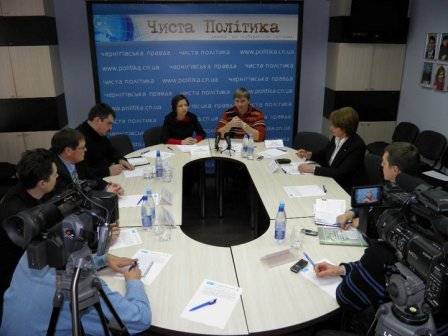
On February 11, 2011, the expert round table “Public Councils: Business or Democracy?” Was held at the Pure Politics Expert Club. The event was organized by the Pure Policy Expert Club and the Polissya Fund of International and Regional Research.
The main purpose of the expert assembly, which was conducted by the focus-group research method, was to discuss the problems of creating public councils and the search for specific mechanisms for ensuring their effective activity.
Three main issues were raised before the discussion:
– What should the Public Council be like?
– What functions should it perform?
– Which structure of the Public Council can become the most effective?
 The roundtable participants noted that the Public Council is a necessary tool for cooperation between the authorities and the community, and the effectiveness of its activities will depend, first of all, on the members of the council themselves. Therefore, experts who have expressed anxiety unexpectedly by the high number of members of the Public Council at the Chernihiv Regional State Administration, as a result of its entry into its composition of little -known public organizations with almost no history of practical activity. It has been repeatedly emphasized that among public organizations-members of the Public Council there are several “groups of influence” that can try to use the Public Council to defend only their own interests, which will adversely affect its ability to interact constructively with the regional state administration.
Based on these warnings, the experts indicated a number of gaps, which should be normatively regulated before the public council began.
1. The Public Council has currently included 72 organizations. Restricting the ability to participate in the composition of the Public Council of other NGOs that express their desire and prove their institutional capacity is discriminatory. Therefore, it is necessary in the Regulations on the Public Council to clearly provide for the possibility and mechanism of accession of other NGOs to the Council.
2. The chairman of the council and deputies are elected for 2 years, so it is necessary to provide in the provision of the norm, which allows two thirds of the official composition of the Council to make a decision on early termination of powers of the executive staff with the definition of a comprehensive list of circumstances that may be for this reason.
3. Considering the fact that the presence of less than half of the official composition of the members of the Council at several meetings may lead to the disruption of the work of this advisory body, to provide for the possibility and mechanism of exclusion by the governing body of the Council of members, which systematically (two or more times) do not attend meetings.
4. Since the proposals for the work of the Council were provided only 11 of the 72 organizations, to urge its members as soon as possible to determine the directions of their own participation, not to spray the potential of public organizations-members of the council when creating working groups and to concentrate the efforts of the Public Council on cooperation with the Chernihiv Regional State Administration.
5. It is advisable to direct the work of the Public Council in the most relevant and socially important areas, without trying to duplicate the directions of work of all units of the regional administration.
6. An appropriate information support is an important component of transparent work of the Public Council. For the purpose of systematic coverage in the media, the activities of the Council should be selected from the members of the council.
7. Realizing that one of the tasks of the Public Council is to organize public consultations, to provide regular meetings of the council management with citizens and representatives of public organizations that have not joined this body, to introduce other forms of feedback. These mechanisms should maintain the connection of this representative body with the community and give legitimacy to its decision.
8. Since the Public Council submits the proposals for the preparation of draft normative legal acts on the formation of state policy in the relevant field, improvement politicians, public examination and monitoring. It is advisable to create an appropriate committee on the analysis of public policy and public examination as part of the Council itself.
The main leitmotif of the meeting was the idea that almost every expert heard from the mouth: for the effective activity of the Public Council, it is necessary to combine the efforts of all public institutions presented in the Council. This is the only way to avoid the imbalances and the wrongful use of this instrument of dialogue of power and the community.
The organizers hope that these recommendations will be considered and taken into account during the first meeting of the Public Council at the Chernihiv Regional State Administration on February 16, 2011.