From export of raw materials to niche food exports: the possibilities of the Association Agreement
What are the taste of pro -European reforms? Did regional producers of niche agro -industrial products use the benefits of an association / in -depth and comprehensive free trade area? Who and what contributed to the increase of export capabilities of Ukrainian manufacturers in the EU market? What should you pay attention to for strengthening and spreading the positive impact of pro -European reforms in Ukraine?
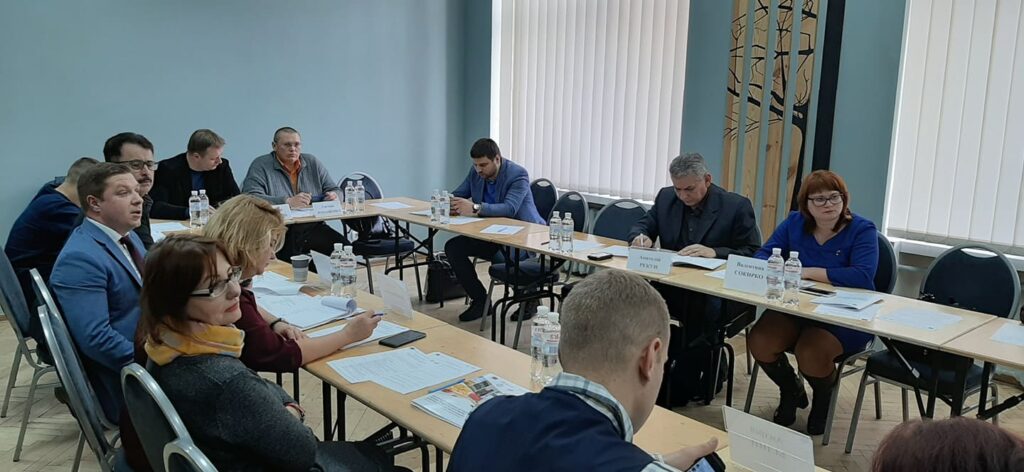
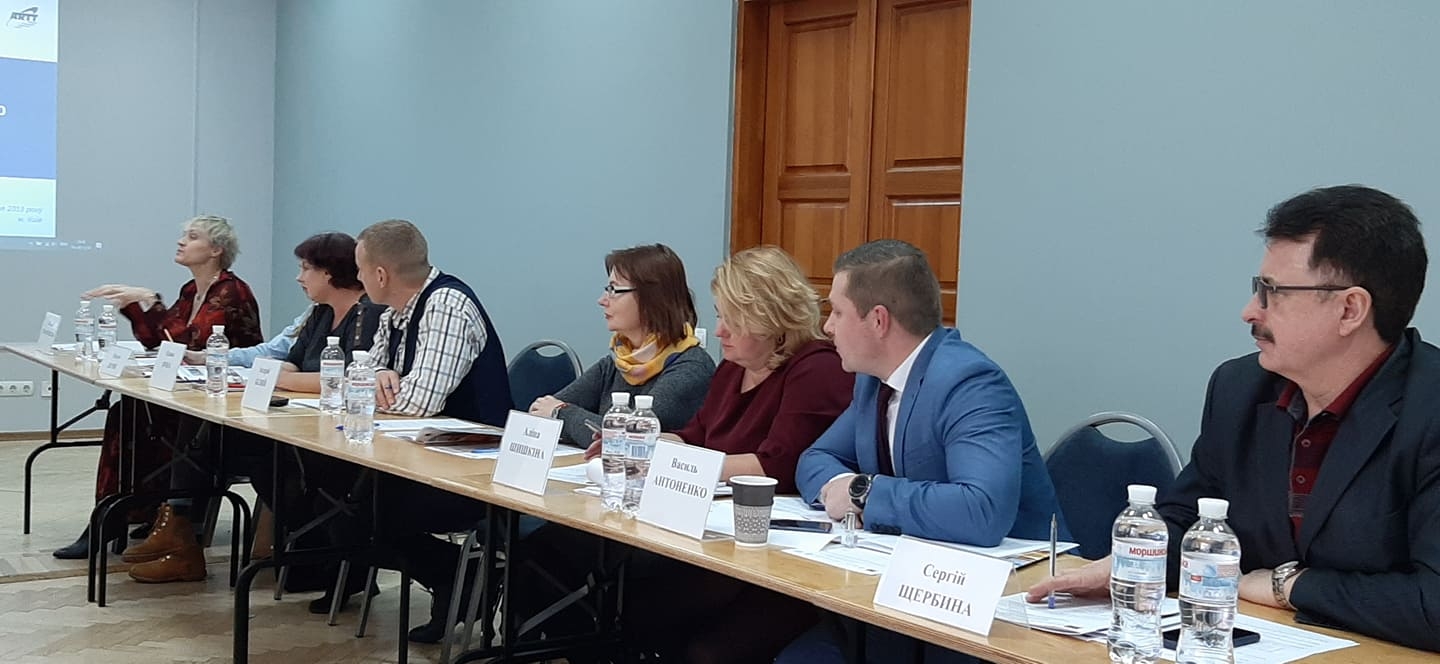
These and other issues were sought by the roundtable participants, which took place on December 9, 2019 in Kyiv as part of the results of the study of the impact of pro -European reforms on the development of agricultural export potential of Ukraine.
In the project “From the export of raw materials to export of niche food: the possibilities of the Association Agreement” experts of the Polissya Fund of International and Regional Research have decided to focus on the stories of niche agro -industrial exporters. Why this topic? And what are niche products?
“Despite the desire to establish the production of competitive high -tech products in Ukraine, it is impossible to ignore the fact that the agro -industrial sector generates almost 40% of all foreign trade. A significant proportion of products goes to the European market. However, the European Union is also a strong agrarian player and actively protects its internal market with tariff quotas. Protected categories of goods include mainly agro -raw products, such as wheat, honey, eggs, milk, etc. Therefore, Ukraine’s prospects in the EU market are the search for its niches and the development of the release of appropriate foods ”, –The project manager, President of the Polissya Fund Maxim Koryavets, said, explaining the choice of the topic of research.
Niche foods are products of the agro -industrial complex, whose special quality, innovative properties correspond to modern nutrition trends (natural, healthy and sports nutrition with low fat and sugar content, bioproducts and organic foods, food for vegetarians and vegans, gluten -free products).
Unlike the traditional raw materials of agricultural exports from Ukraine, such products are mainly not subject to restrictions on the volume of duty -free deliveries to the EU market, that is, it does not apply to tariff quotas.
Cherkasy, Chernihiv and Sumy regions were selected as the target regions of the study. Compared to the western regions of Ukraine, it is traditionally more difficult to establish channels of import of raw materials and equipment. Nevertheless, there are examples of enterprises in the studied areas that have managed to prepare and introduce European requirements for food production that is in demand among European consumers.
As part of the Association Agreement between Ukraine and the EU, as of January 1, 2016, the PVZVT began to operate between them. More than 95% of all commodity positions under the Ukrainian Classification of Foreign Economic Activities of the Agreement have been for Ukraine with duty 0. The result of trade liberalization has been the increase in the exports of Ukrainian agro-agricultural products to the EU during 2016-2018.
The study of the situation in the field of production and export of niche food is encountered by a number of obstacles related to the interpretation and understanding of this category of products, as well as the lack of its separate statistical accounting.
“The absence of special reporting forms for organic producers in Ukraine makes it impossible to determine its export trends to the EU. According to the EU, Ukraine currently ranks 4th among 115 countries that import organic products into the European market and 1st place among exporters on the European continent”,– said the expert of the project Tatiana Zosimenko.
For agricultural and food producers, the condition for entering European markets is compliance with European requirements for the safety of production. The implementation of an international system of hazardous factors analysis in Ukraine was fundamental here (HACCP – Hazard Analysis and Critical Control Points). It is based on an important principle of providing control from the lane to the table. The efficiency of the functioning of this system at Ukrainian enterprises is confirmed by the fact that the right to export livestock foods to the EU every year receive more and more domestic producers.
Stopping on the problematic aspects faced by exporters-greetings, Tatiana Zosimenko noted the following results during the survey research:“Despite the fact that there are many institutions in Ukraine, there are various programs, but niche producers lacks a more holistic support vector, along the entire chain of value added. For some reason, the manufacturers of high -cargage products benefit from the existing support. Simultaneously Niche products make a lack of raw materials”.
In his speech, the Director of the Department of Interaction with Exporters and the Promotion of Exports of the Ministry of Economics, Trade and Agriculture of Ukraine Alina Shishkin and the State Expert of the Expert Group on European Integration of the Directorate of Strategic Planning and European Integration of the Ministry Vasyl Antonenko.“European integration is not just about exporting products to EU countries, it is essentially an entrance ticket and other countries … If we modernize production and meet the requirements of the European Union, this is enough to start procedures and be sure that we can access other markets”,– said Vasyl Antonenko.
Food industry enterprises of Chernihiv, Sumy and Cherkasy region carry out work in the direction of export through certification, marketing activities, participation in state and international programs. PJSC “Shchors of the Production Plant”, LLC “Dobrodia Foodz”, LLC “Desnalend”, LLC “Arkmen”, TM “Dobrohov” – here is an incomplete list of producers of organic products that have set up the way to the European market. During the event, successful stories of regional exporters-greetings were presented.
“It goes to us very much on the beds and compete, so that with our interest rates here here is a matter of fact. Fortunately, that the state programs, which help to compensate for the ponds, help us to buy equipment, compensate for the costs of this equipment. It goes directly to the very long and complex process. We negotiate 2-3 years innocent, for the fact that it will be a first trial of the party ”,– Andrey Bely, Director of FG “Nizhyn Agroinvest”, director of Nizhyn Agroinvest. However, the entrepreneur considers a constant movement forward and finding a way out of any difficult situation:“If there is a goal, you need to work”.
Independent expert, acting Minister of Agrarian Policy and Food of Ukraine in 2019 Olga Trofimtseva believes that Europeans need to talk about mutual recognition of certification, accreditation bodies and further economic integration within the framework of the Association Agreement:“My personal position is that in 2021, except for the new Round of Negotiations aboutzonesVilnOhtradeandWe need to prepare proposals for European colleagues, perhaps for a common economic space in any form, because European companies want to make their investments here, including in processing, production capacity. … Our economic interests need to be articulated more confidently. To European colleagues, it should be reported that Ukraine’s greater economic integration into the European Union or with the European Union is not the Proban of Ukraine, but given the processes that are happening in the EU, including Brexit, Ukraine could strengthen the European Union, including through our labor, and sobage power, production, and production power.
Closing the event, Tatiana Zosimenko summed up that the key to strengthening the institutional support of agricultural exports is the need for closer communication between entrepreneurs, local authorities, non -governmental export support institutions for the sake of developing a joint strategic vision of export specialization:“Success can only be in partnership. In order to work successfully, you need to unite, trust, communicate. Due to more trust, greater cooperation, greater communication, our manufacturers will use the maximum of state support, international support, and feed delicious useful products not only abroad, but also our consumers. “
You can read in detail about the results of the study and the success stories at the links:report,brochure,Success Stories.
Reference:The event is carried out within the framework of the project “From the export of raw materials to export of niche food: the possibilities of the Association Agreement”, which is implemented by the Polissya Fund of International and Regional Studies (Chernihiv) in partnership with the Association of Regional Analytical Centers. The implementation of the project has become possible within the framework of the Initiative “Promotion of Reforms to Regions” of the Institute of Economic Research and Political Consultations (Kyiv) and “European Truth” with the assistance of the European Union (http://ec.europa.eu/europeaid). Some opinions expressed in materials or voiced in the West are a personal position of authors/speakers and in no way reflect the point of view of the European Union.
For more information, contact Olesya Dontsova,pfirs.org@gmail.com.