
Local self -government reform needs to be communicated – the opinion of Ukrainian experts
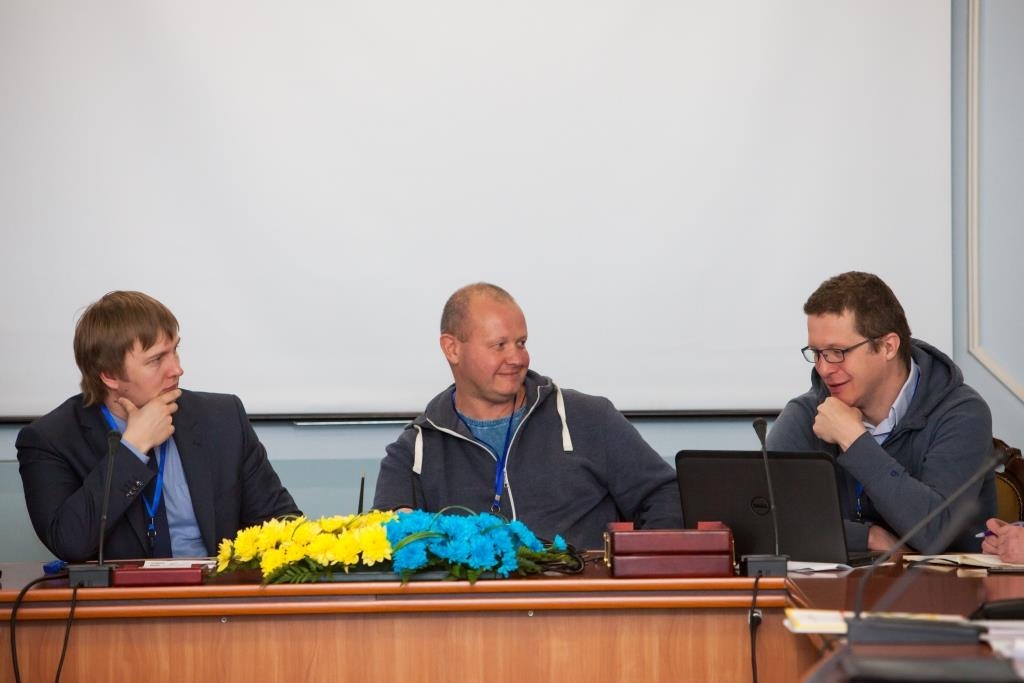
The role of civil society and the media in the reform of decentralization was discussed on April 21, 2015 during two parallel panel meetings, which finalized the two -day round table “Decentralization and development of communities in Ukraine”, which took place in Chernihiv. The mentioned meetings were as practical as possible and were aimed at improving coordination and increasing the synergy of the assistance that the Visegrad Group countries provide Ukraine.
An event with the participation of representatives of non -governmental organizations that took place under Gennady’s co -models Maxaka, the President of the Polissya Fund of International and Regional Research, and Konstantin Kvurt, Executive Director of the NGO Internews-Ukraine, began their speeches by European guests. Experts from Slovakia and the Czech Republic have shared with representatives of Ukrainian non -governmental organizations experience in working in the fields of access of citizens to public information, as well as their real participation in the decision -making process. This practice was important for the attendees in view of the concept of reforming local self -government, which provides for maximum involvement by the authorities in the decision -making of management decisions on local importance and facilitating the development of forms of direct democracy.
In their turn, the present Ukrainian practitioners outlined a range of problematic issues that arise in the reform process and need special attention. The idea that the lack of communication and adequate clarification of the current and perspective situation was heard from almost every speaker. Experts have agreed that it is important to create a communication strategy that would provide, including information work with the community at the primary level. Among the effective ways to get out of the problem, according to public activist Oleg Chernenko, is the search and recruiting of the leaders of the opinions of small administrative and territorial units that would disseminate information about the decentralization process and its benefits. However, in order to form a network of agents of influence, it is necessary to have a clear vision of administrative-territorial reform, which must be defined in the relevant law, as well as identify the opponents of the reform, says Ruslan Rokhov from Khmelnytskyi. In his turn, Vadim Stefan, an expert from Poltava region, sees the solution of the problem with communication through close cooperation with journalists and finding the right format of information on reform. Olga Gridnev from Kirovohrad region proposes to put in a communication strategy, above all, the messages for young people and, accordingly, to convince the need for reforms, above all, young people, thus involving them in the process. And Lyubov raised from Cherkasy region the opinion on the geography of the information campaign, which should first cover the most problems of the region.
Victor Kozoriz from Kharkiv region voiced that the use of sociology during reform is also an important component of understanding people’s attitude to the process. This, according to practice, can be done in a budget way, involving students of profile faculties of individual universities. Yes, it is important to communicate with people, understanding the overall mood and on the basis of the appropriate sections to build an information campaign.
The prototypes of reform offices, the creation of which during this event was announced on April 20 by VyacheslavThe Deputy Minister of the Ministry of Regional Development, Construction and Housing of Ukraine already exist in the regions of Ukraine. One of them, according to Anatoly Parkhouk from Volyn, was created on the basis of his public organization even when it was not known that their opening would be centralized. In view of this, according to the audience, it is important to involve representatives of NGOs for the sake of synergy of action. Fear
Public expert Mykola Lyakhovich also expressed the functionality of the idea of creating offices, who believes that professionals, not statistics, should work in reform offices.
In turn, when constructing a communication strategy, it is important to take into account the vulnerability of the information field as well as an external threat. This opinion was made by the media expert Alexander Lavrynovych from Lviv region, who has experience in establishing a dialogue between people with diametrically opposite views through the media.
As part of the event, other problems and possible approaches to solving them were voiced, which will be accumulated by the organizers in a single document and transferred to European partners from the Visegrad Group countries, as well as by the highest authorities.
The event intended to improve coordination and increase the synergia of assistance that Poland, Czech Republic, Hungary and Slovakia provided to Ukraine was held by the Ministry of Foreign Affairs of the Republic of Poland and Solidarity Fund PL in cooperation with the Polissya Fund of International Regional Studies.