

Will solidarity responsibility benefit the Ukrainian economy?
Expert commentary on the government’s intentions to repay wages due to the redistribution of a single social contribution.
Sergey Tigipko, Vice Prime Minister-Minister of Social Policy of Ukraine, June 16 this year announced the drafting of a solidarity bill. Its essence is to direct part of a single social contribution to repayment of debt on wages at state -owned enterprises.
In our opinion, such an initiative, seeking to reduce social tension in individual enterprises and in individual regions, at the same time creates a risk of demotivation for effective working institutions and individuals-entrepreneurs. However, this risk can be minimized as certain conditions.
First of all, it should be noted that over the last 2 years, wages in the Ukrainian economy have decreased by almost 60%, regardless of the ownership of enterprises.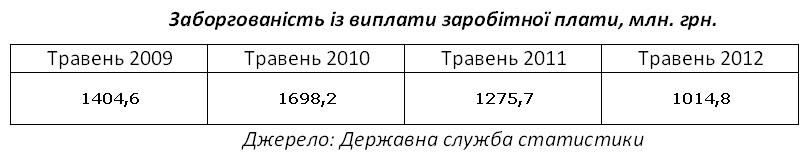
Thus, the government should analyze what tools (except for the redistribution of social contributions) can be effective for further repayment of these debts.
With regard to government initiative to introduce solidarity, it is, first and foremost, in essence, it is essentially state support for unprofitable or bankrupt enterprises. Although the state budget is not formally used here, this support is because, under the law, funds will be raised in the state -owned fund and redistributed on behalf of the state in favor of specific enterprises.
Therefore, a precedent is created when efficient, profitable businesses will actually be subsidized by non -working enterprises. Awareness of this fact may adversely affect labor productivity, or become an incentive to shadow the income of enterprises.
These risks can be avoided by using EU state aid principles:
-transparency, namely publication (including by accessing public information) of the amount of assistance to repay the wage arrears and publish the list of enterprises receiving such assistance.
-Changing the behavior of the recipient, namely providing assistance, provided that systemic deficiencies in the enterprise will be corrected, and in the future it will not require such assistance.
We offer all interested NGOs, independent experts to support a proposal to comply with these principles in the preparation of a government bill on joint and several liability.